Just launched Version 1 · 2026
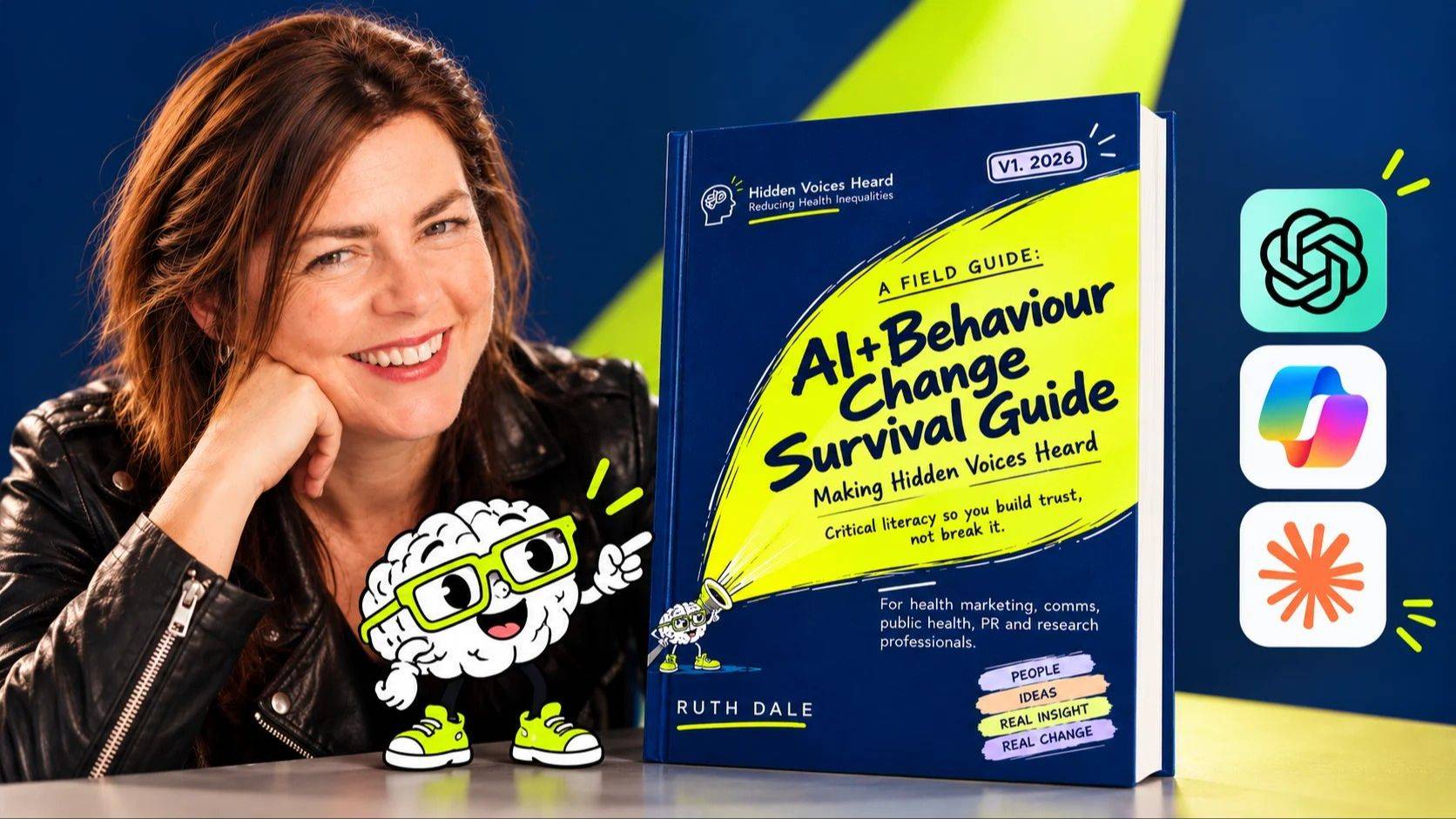
The AI & Behaviour Change Survival Guide
A field guide to AI and behaviour change for health marketing, comms, public health, PR and research professionals.
Critical literacy so you build trust, not break it.
Insider Readers on Substack get the handbook gifted. Everyone is welcome over on Substack, where our Community of Practice lives.
One guide. Four ways in.
E-book
The complete handbook
All three parts, the glossary and full references, ready to read and keep.
Interactive book
Play, tick off, track progress
Brain Games, Stop / Start / Steal actions and HEARD™ checks you work through as you read.
Substack posts
Chapter by chapter
The Guide published as posts on AI Survival Skills for Changemakers, so you can read and discuss it with the community.
Insiders only
Added commentary all year
As the tools change, Insiders get fresh commentary, prompts and experiments through the year.
Why this handbook exists
Our brains have not evolved as fast as our environments.
Our mission is simple: to make hidden voices heard. Understanding how AI influences this in our modern world is now critical.
But we keep talking about AI as though it's coming. It isn't coming. It's here.
Organisations are already adopting it. Decisions are already being influenced by it. Health inequalities aren't a future consequence we need to guard against either. They're already here.
What's inside
Three parts. One route from people to practice.
Opens with Introduction: Hello AI. Goodbye Trust? Then read it in order or dip into a question from your own work.
Part 1 · Critical Knowledge
Health Inequalities
The conditions shaping choices
- What actually are health inequalities?
- Brain Game: What predicts how long you will live?
- Why does everyone keep talking about Marmot?
- Fun fact: Maslow did not create the triangle
- Why is healthcare alone not the answer?
- Equality and equity: what's the difference?
- Scarcity: it's not motivation, it's bandwidth
- Critical Knowledge checklist
Part 2 · Critical Knowledge
Behaviour Change
How we make decisions
- How do we make decisions? (You, me and the supposed hard to reach)
- Behavioural science through a poverty lens
- The 9 ¾ Critical Decision-Making Survival Skills
- Your brain started from an assumption. So did the AI.
- Reference point, framing, confirmation bias, present bias, bandwagon, optimism bias, status quo, reactance and social proof
- The Dark Arts of Misinformation
Part 3 · Critical Literacy
AI and Our Digital Environment
Chat → Prompts & Skills → Your AI Assistant
- AI literacy overview: Level 1 Chat, Level 2 Prompts & Skills, Level 3 Your AI Assistant
- Try it: Empathy Mapping with a prompt chain
- Your human judgement survival guide: HEARD™
- How I used AI to make this handbook
- AI Survival Skills on Substack
Plus an AI Glossary for Non-Techies and full references.
11 Brain Games
Guess first. Then find out what your brain just did.
The habits and shortcuts in the Brain Games aren’t laziness; they’re efficiency. And you guessed it… AI can amplify these shortcuts.
Brain Game · guess first Health inequalities
What predicts how long someone will live? Don’t overthink it.
Guess first. The answer is inside the Guide.
Brain Game · guess first Scarcity
Your washing machine breaks, your child is sent home from school, your landlord emails about the rent, your manager wants a report by 5pm, your car fails its MOT…
Guess first. The answer is inside the Guide.
Brain Game · guess first How we decide
How many decisions do you make in a day? A) 10,000–15,000 B) 30,000–35,000 C) 60,000–65,000
Guess first. The answer is inside the Guide.
Brain Game · a riddle Assumptions
A father is in a car crash with his son. The father dies, and the boy is rushed to hospital. The surgeon sees him and says: “I can’t operate on him – he’s my son!”
Guess first. The answer is inside the Guide.
Brain Game · guess first Reference point
Put one hand in warm water and the other in cold water. Wait a minute. Now put both hands in the same bowl of lukewarm water. What does each hand feel?
Guess first. The answer is inside the Guide.
Brain Game · guess first Framing
A disease threatens 600 people. Researchers gave two groups the same decision, but described it differently. Which option do you think more people chose?
Guess first. The answer is inside the Guide.
Plus five more: present bias, bandwagon, optimism bias, status quo and reactance.
Your survival card
HEARD™ it before you trust it.
HHidden Voices · Who are we missing?
EEmpathy · Are we listening or generating?
AAssumptions · What are we assuming?
RRed Team · How could we be wrong?
DDecisions · What decision are people actually making?
Who this handbook is for
Pros working in health marketing, communications, public health or digital health, whether that's in voluntary organisations, human resources, internal communications, patient communications, marketing companies, pharmaceutical organisations, healthcare providers, the NHS or local government.
You might be developing a service, designing an intervention, commissioning research, creating a policy, writing a campaign or trying to understand why people are not responding as expected.
You do not need to be a behavioural scientist. You do not need to be techie.
About the author
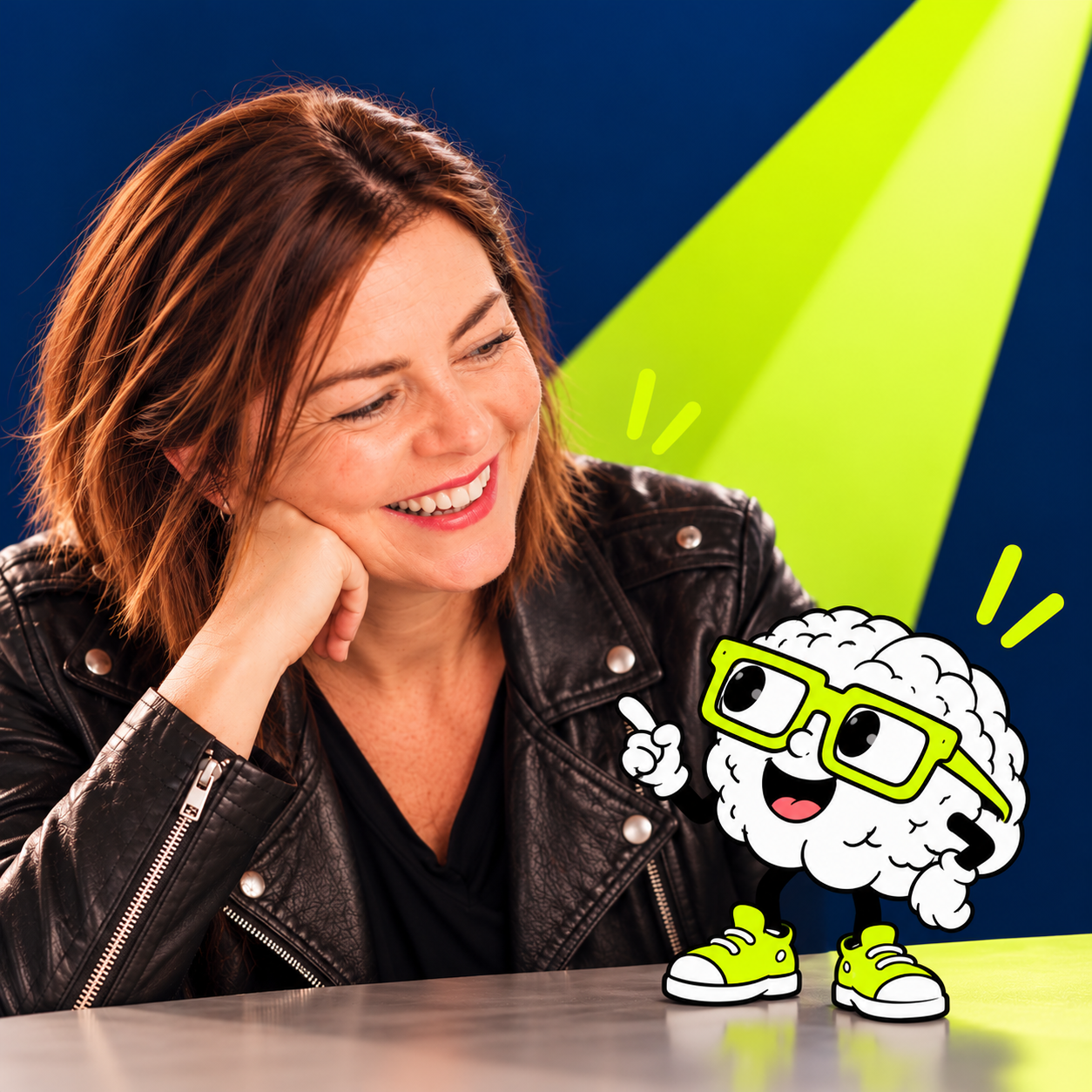
Ruth Dale
Ruth Dale works strategically with health marketers and communicators to use AI without widening health inequalities.
She is CEO of Hidden Voices Heard, founder of the Behaviour Change Marketing Bootcamp and winner of the HSJ Award for Social Marketing. With over 20 years across the NHS, Public Health England and local government, including the commissioning and delivery of public health, she has worked on national campaigns including Change4Life and cancer prevention, and has trained 500+ health and communications professionals.
We're bringing that expertise into AI – not discovering our profession through AI.
Our training grows directly from our research, experiments, professional practice and practical builds.
Investigate → Apply → Test → Learn → Teach
Your Survival Guide is written by a non-techie for non-techies, from three viewpoints:
- As a business owner: I look at where it can help and hinder our operational processes. The everyday stuff.
- For our clients and their behavioural insight deep dives: how is it impacting their audiences’ decision-making?
- For our profession: how does it impact our audience research skills, analysis skills, comms and marketing planning, execution and messaging?
We're doing some seriously interesting work. Come and be part of it.
No stupid questions. Join us on Substack.
Everyone is welcome in our Community of Practice. Insider Readers get the handbook gifted, plus added commentary through the year.
Build trust. Don't break it.